

Lessons from smallholder coffee farms in Guatemala
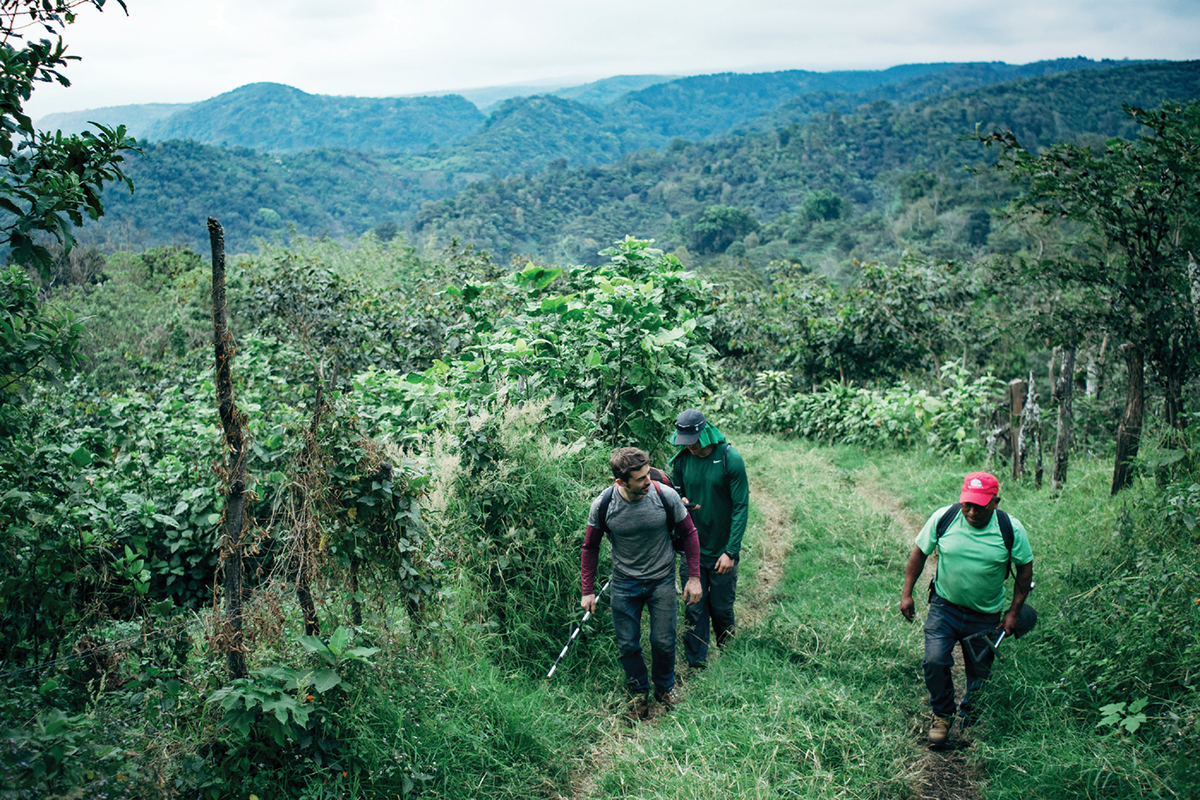
- A 2019 ASA, CSSA, and SSSA Annual Meeting presentation by Taya Brown brought smallholder coffee farmers in Guatemala to the fore.
- Coffee leaf rust, volcanic eruption, and changing climate all impact the smallholder farmers in Guatemala, who struggle to earn a viable living from their coffee farms.
- Brown talks through the challenges of working with smallholder farms, scaling up coffee production, and what it means to be a researcher for the farmer.
Coffee is an orphan crop,” Taya Brown says. “We are so far behind in understanding it because coffee is not consumed where it’s produced.”
Brown just completed a five-year stint in the Yepocapa region of Guatemala as part of her doctoral research at Texas A&M University’s Center for Coffee Research and Education Grown. Yepocapa is part of the “Bean Belt” where coffee is grown, spanning about 25 degrees latitude on either side of the equator. The two most common species—Coffea arabica and Coffea canephora—thrive in the tropics, at elevations of 600 to 2,000 m. Like wine, the unique growing environment that produces a coffee bean influences it health and final flavor.
The Yepocapa region is renowned for its flavorful coffee, but the farmers of this specialty crop often find it tough to make ends meet. A bout of coffee leaf rust, coupled with the challenges of a changing climate and an inhospitable coffee market, put coffee production under threat.
While Brown was in Yepocapa, she interacted with smallholder farmers, performing the evaluation component of a larger project to provide farmers with hybrid coffee plants, resistant to the devastating coffee leaf rust fungus. She presented her research at the 2019 ASA, CSSA, and SSSA Annual Meeting in San Antonio, TX, reiterating the importance of working directly with farmers to foster adoption of new technologies. Her work on hybrid coffee plant use in Guatemala teaches us much about coffee farming, smallholder priorities, and the unexpected barriers that prevent long-term change.
Coffee Leaf Rust
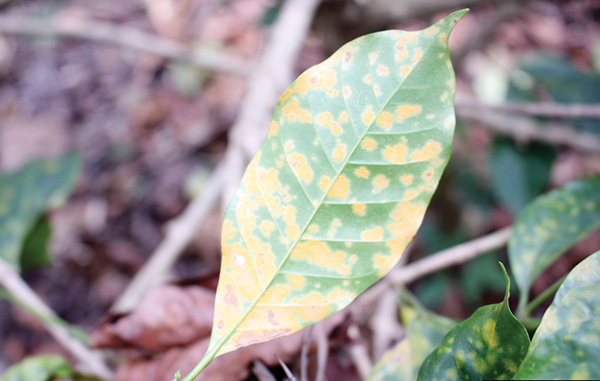
In 2012, farmers in Guatemala started noticing little orange spots on the deep green leaves of their coffee plants.
The coffee leaf rust fungus, Hemileia vastatrix, attacks leaves and causes leaf loss; with leaf loss comes yield loss. Not only does this fungal parasite devastate coffee farms, it has dire effects on the livelihood of coffee farmers who, in Guatemala, typically farm only a single crop. By 2013, 80% of Guatemalan coffee farms were impacted by leaf rust.
In 2015, the Sustainable Incomes through Coffee Farming Improvement (SICFI) project was formed, funded by the Starbucks Foundation and carried out by the World Coffee Research and Anacafé (https://bit.ly/31ZLcbv). The SICFI project provided coffee leaf rust resistant plants to farmers in the Yepocapa region of Guatemala, near the base of the Fuego Volcano. The F1 coffee plant hybrid, dubbed ‘Centroamericano,’ not only combatted leaf rust spread, but had good cup quality and high yields, too (https://bit.ly/3ec0yhX).
In the summer of 2016, 130,000 of these plantlets were distributed to farmers in Yepocapa. Taya Brown was part of the team to evaluate the implementation of hybrid plants.
Farmer Focus Groups
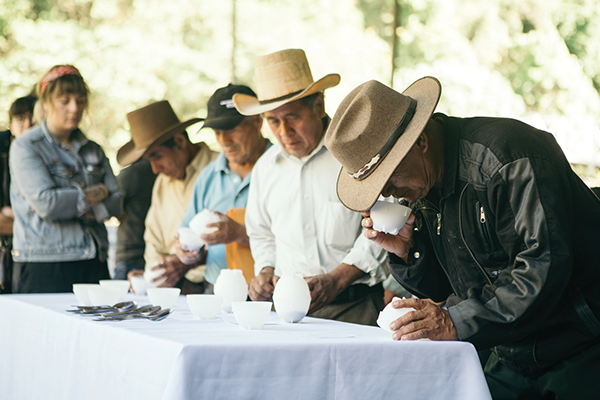
With the help of Guatemalan agronomists, Brown held focus groups to get feedback and answer questions from smallholders who planted the hybrids.
“It’s all about switching the dynamic,” Brown says. “We don’t need to give people what we think they need; instead, we need to give them a place at the table to guide the research that identifies their greatest needs.”
It was with this attitude that Brown conducted group interviews with the farmers, asking them open-ended questions about their management practices, profitability, and their thoughts on the hybrid plants.
“We fielded so many questions about the hybrids—I wasn’t expecting that,” Brown acknowledges.
The farmers were worried about the warning they received not to plant seeds from the Centroamericano hybrid. The offspring of F1 hybrids may not have the traits that make the parent plant desirable. Plus, it takes three or four years for a coffee plant to mature and for farmers to harvest a strong yield of coffee cherries.
Whether it’s decreased yields and the ensuing economic impacts, or the loss of characteristics that make the hybrids valuable in the first place, Brown and her team are concerned about the unintended consequences of farmers sowing seeds from hybrid plants. As hybrids are increasingly offered as solutions for the problems coffee farmers face, it will be important for researchers to develop a thorough understanding of hybrid impact before sending them to farmers on a large scale.
“Since they were told not to plant the seed, they were concerned the hybrids may be transgenic, and that’s something that made them really nervous,” Brown says. “We wouldn’t have found that out without actually sitting down and talking with the farmers.”
Another aspect of Brown’s research is examining the prices smallholder farmers in Yepocapa receive for their beans.
The conventional coffee market in Guatemala relies on bulk batches. Buyers traditionally purchase coffee in large volumes, processing beans from different farms in batches together. With this sort of model, there’s no monetary incentive for a farmer to adopt environmentally friendly practices, which are often costly to implement. Nor is there any financial reward for producing higher quality beans that yield a better-tasting cup of coffee.
Brown wants to help farmers get fair prices for their beans and sell their coffee on the specialty market.
“In specialty markets, you start evaluating bean quality, which can mean keeping smaller lots separate and processing those in small batches,” Brown says. “There’s a lot of moving parts for farmers to track, which can be really intimidating if you’ve never done it before.”
Soil Management, Cup Quality
Now that Brown’s Ph.D. research is complete, she’s still looking for ways to give back to the farmers of Yepocapa and improve the prices they get for their beans.
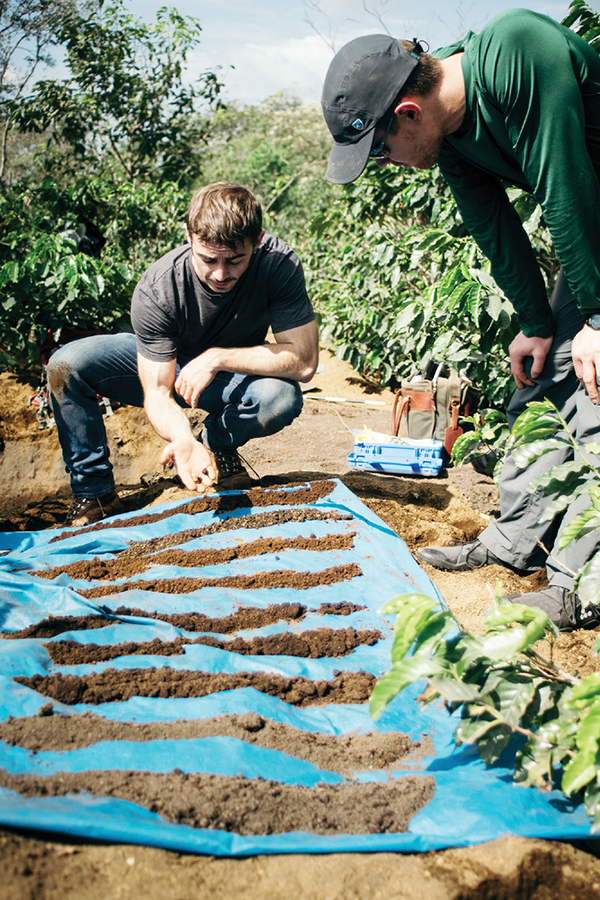
With more smallholder farmers willing and interested in getting their beans to specialty markets, Brown has a means of tracking both coffee quality and soil health. Brown’s team has an investigation in the works that looks at soil, leaf, and fruit samples from the coffee trees. They’ve sent samples for lab analysis, and once they have results, they can make better management recommendations, showing farmers that their management decisions have direct impacts on coffee quality.
“The best part is, we won’t just make these recommendations and leave,” Brown says. “We’ll make recommendations and trial them on-site and then buy the coffee from the farmers for those trial parcels. We’ll be there every step of the way.”
Though Brown’s plans to begin field trials in Guatemala this summer were foiled by the pandemic, she’s still been finding ways to help the farmers from afar. She’s continuing to engage with farmers through her non-profit, the Del Fuego Project. Brown co-founded the project in 2018 when the Fuego Volcano—only 4 miles from Yepocapa—erupted and killed 110 people, devastating coffee farms in the region.
Now, Del Fuego and its sponsors put on a yearly Coffee Quality Summit to educate farmers on aspects of the specialty coffee industry (https://bit.ly/3jJFv7J). Their next step is to build a coffee quality lab, allowing farmers in the region to test the cup quality of their coffee on the spot and provide them with feedback about their coffee beans—an important step to advance the farmers’ ability to advance in the specialty market.
When travel restrictions lift, Brown plans to get back to Guatemala and continue her work there.
“I’m not studying the farmers in Yepocapa,” Brown says. “I’m working for them.”
Text © . The authors. CC BY-NC-ND 4.0. Except where otherwise noted, images are subject to copyright. Any reuse without express permission from the copyright owner is prohibited.