

Large soil invertebrates may improve water capture in drylands | Science Societies Skip to main content

Large soil invertebrates may improve water capture in drylands

October 22, 2020
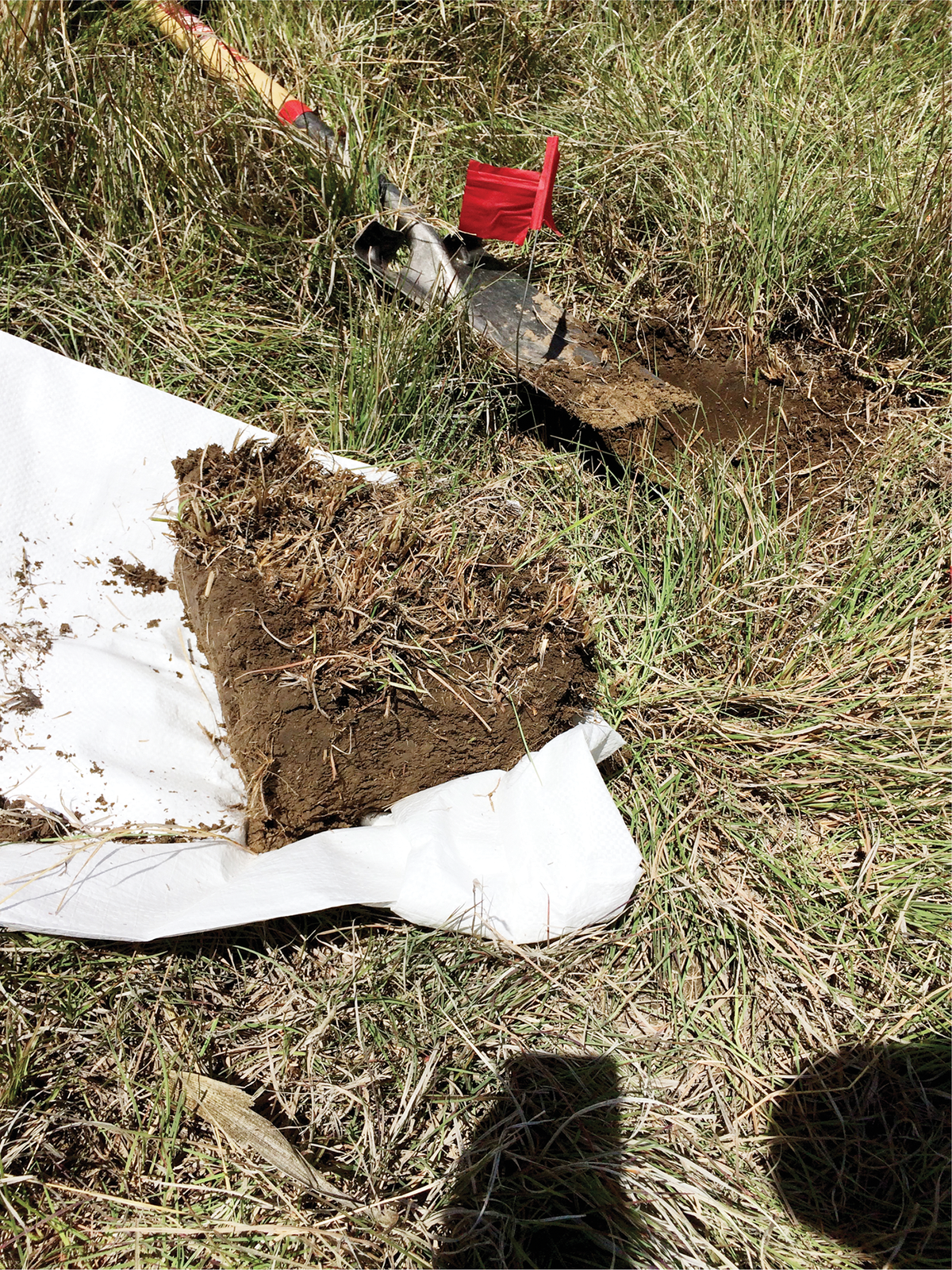
A soil monolith that will be sorted for visible soil organisms that may be important for soil function. Photo by Courtland Kelly.

In an article recently published in the Soil Science Society of America Journal, researchers from Colorado State University surveyed soil macrofauna from a 32-year crop rotation study with different amounts of fallow in rotation. The trial compared three no-till crop rotations and a conservation grassland treatment that was planted at the start of the experiment.

Earthworms and ants were the most abundant organisms in both row-cropped and grassland treatments; earthworm densities ranged from 74 to 340 m–2, and ants and other arthropods ranged from 48 to 660 m–2. Overall, soil macrofauna were positively related to metrics of water capture, including soil aggregate stability and infiltration.

As precipitation patterns become more unpredictable and extreme, effective capture of that moisture is critical for crop success. Often overlooked, soil organisms may help build agroecosystem resiliency, highlighting the importance of farming for soil organisms as well as crops.

Dig deeper

Kelly, C., Schipanski, M., Kondratieff, B., Sherrod, L., Schneekloth, J., & Fonte, S.J. (2020). The effect of dryland cropping system intensity on soil function and associated changes in macrofauna communities. Soil Science Society of America Journal, 84. https://doi.org/10.1002/saj2.20133


Text © . The authors. CC BY-NC-ND 4.0. Except where otherwise noted, images are subject to copyright. Any reuse without express permission from the copyright owner is prohibited.